Types of AI Agents You Should Know
As an aspiring AI & ML Engineer, it’s vital to understand the foundational concepts behind AI agents. Think of AI agents as software entities that can perceive their environment, reason, and act based on those perceptions. Now, there are different types of agents, each with its way of thinking and acting. So, in this article, I’ll break down the types of AI Agents you should know in the simplest words.
Types of AI Agents You Should Know
Not all agents are equally intelligent. Some react instantly without thinking. Others remember things, plan, and even learn over time. To understand how AI Agents work in practice, you need to know the five main types. Let’s break them down step by step.
Reflex Agents
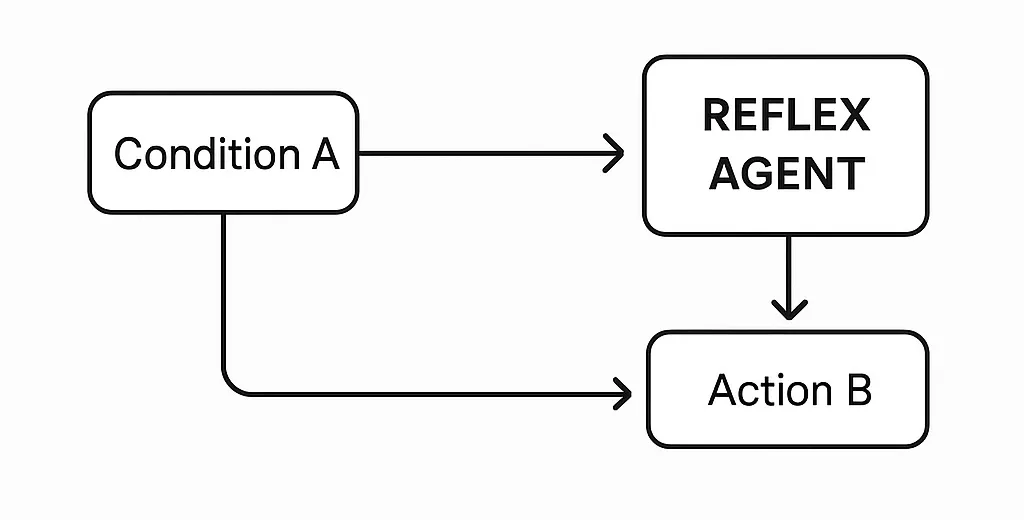
Reflex agents are the simplest kind of AI agents. They don’t think; they react immediately based on predefined rules. You can imagine them as if-then machines. If condition A happens, then do action B. That’s it: no memory, no learning, no long-term planning.
Here are some examples to understand better:
- A thermostat is a classic reflex agent. If the room temperature falls below a certain level, it turns the heater on. If it’s too hot, it turns on the cooling.
- A basic chatbot that responds with “Hello!” every time you say “Hi” is also a reflex agent.
Even though reflex agents sound basic, they’re still widely used because they’re fast, reliable, and predictable. In industries like manufacturing, safety-critical systems, or basic automation, you often want something that reacts instantly without overthinking. For example, a reflex agent in a factory machine could shut down equipment immediately if it detects overheating, preventing damage or accidents.
Model-Based Agents
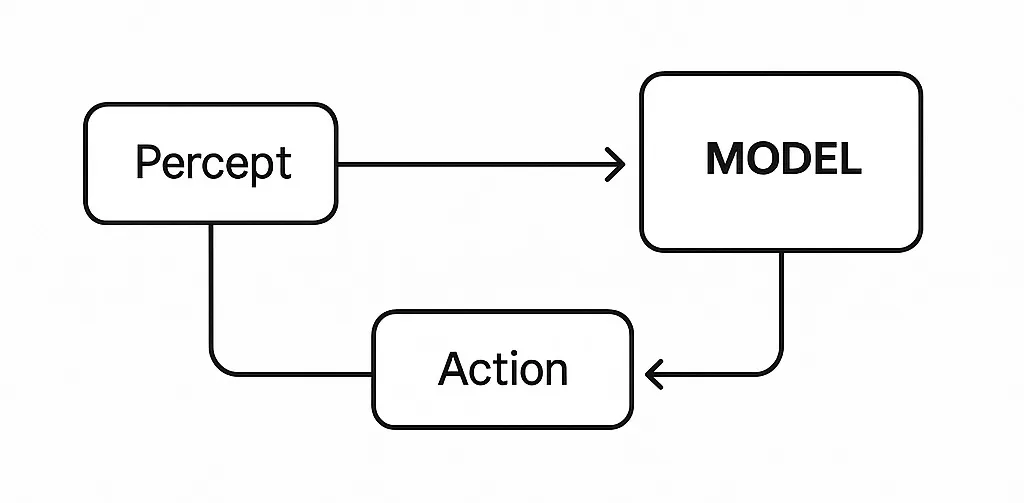
Unlike reflex agents, model-based agents keep track of what’s happening in the world. They maintain an internal representation (or model) of the environment. This allows them to make better decisions, especially in situations where not everything is visible at once.
For example, imagine you’re using Google Maps. While driving through a tunnel, your GPS signal disappears. A reflex agent would stop giving directions because it lost input. But a model-based agent uses its mental model of your last speed and direction to keep predicting where you probably are until the signal comes back.
Most real-world systems don’t have access to perfect information all the time. Self-driving cars can’t see around corners, and medical diagnosis systems can’t know everything about a patient instantly. Model-based agents allow AI to fill in the gaps and make better decisions in complex, uncertain environments. That’s why you’ll see them in robotics, autonomous vehicles, and even predictive maintenance in industries.
Goal-Based Agents
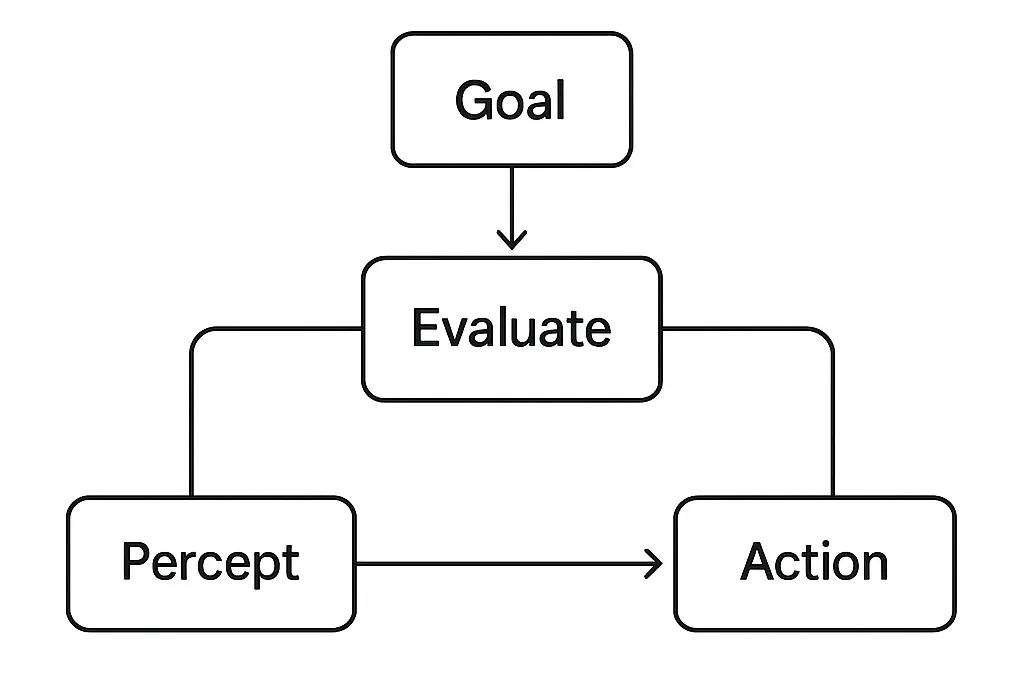
Goal-based agents take things a step further. They don’t just react or remember, they act with a specific objective in mind. Instead of unthinkingly reacting to inputs, they evaluate which actions will move them closer to their goal.
A self-driving car is a perfect example. Its goal is to take you safely from Point A to Point B. Every action it takes, whether slowing down, changing lanes, or taking a turn, is evaluated based on whether it helps achieve that goal.
Most practical AI applications need to aim toward outcomes. A delivery drone’s goal is to deliver a package to the correct location. A customer support bot’s goal is to solve your issue. Without goals, agents are just reacting without purpose.
Utility-Based Agents
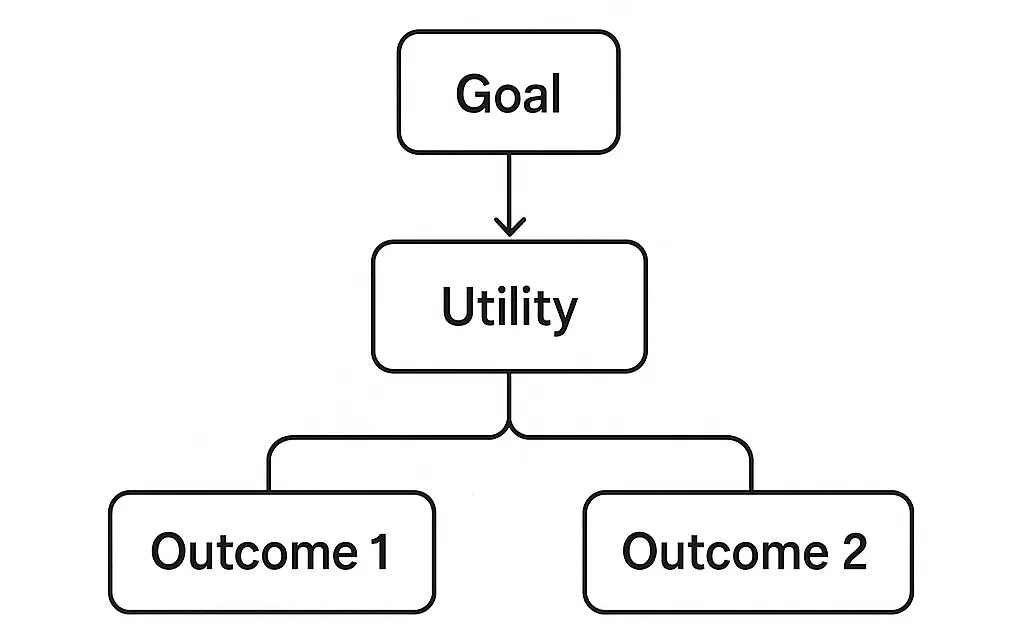
Sometimes just having a goal isn’t enough. Imagine two different ways to reach your destination: one is faster but riskier, the other is slower but safer. Both achieve the goal, but which one is better? That’s where utility-based agents come in. They don’t just aim for the goal; they evaluate the desirability of different outcomes and choose the one that maximizes overall benefit (or utility).
Here are some examples to understand better:
- Netflix doesn’t just try to get you to watch something. Its utility-based recommendation engine aims to maximize your enjoyment by showing you the content you’re most likely to love.
- In ride-hailing apps like Uber, the system doesn’t just assign you any car; it tries to optimize for waiting time, driver distance, and overall efficiency.
In the real world, decisions aren’t just about reaching the goal. They’re about trade-offs: speed vs safety, cost vs comfort, accuracy vs computation. Utility-based agents are at the heart of optimization problems, which dominate modern AI and business applications. From ad targeting to logistics to financial trading, utility-based thinking is everywhere.
Learning Agents
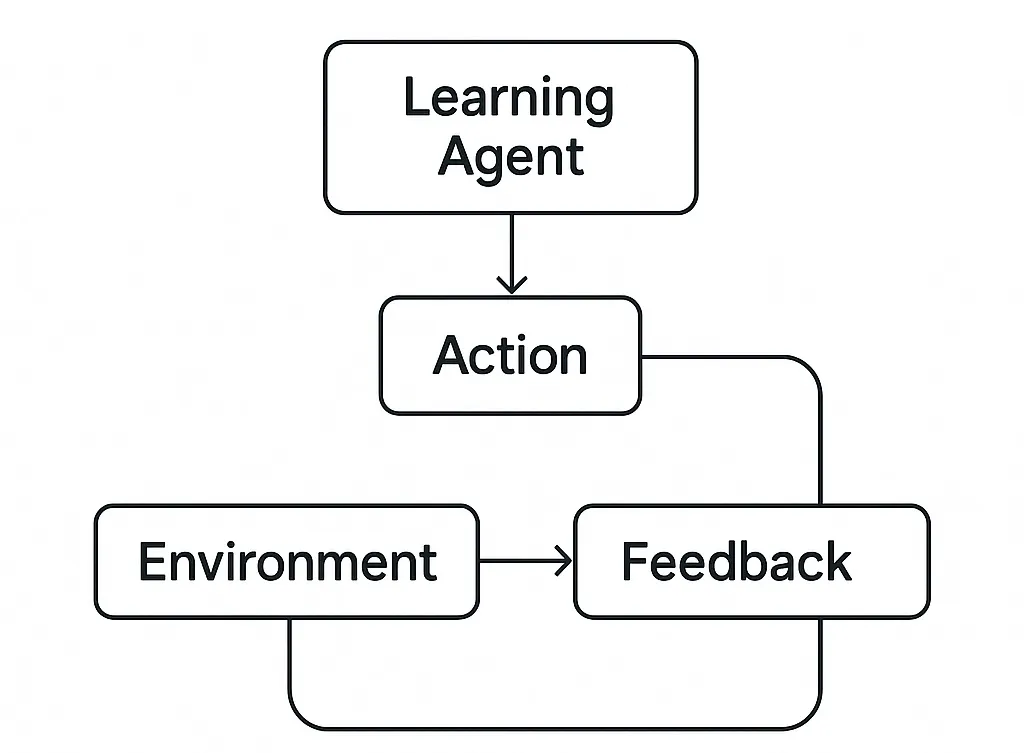
Finally, we have the most advanced type: learning agents. These are agents that don’t just act; they improve with experience. They learn from feedback, adapt to new environments, and get better over time. This is where machine learning and reinforcement learning come into play.
Here are some examples to understand better:
- Spam filters are a classic learning agent. At first, they may misclassify emails. But as you mark emails as spam or not spam, they learn from patterns and improve.
- Personalized assistants like Siri, Alexa, or Google Assistant also fall into this category. They learn your voice, your preferences, and your habits, becoming more useful over time.
Learning agents are driving the AI revolution. They power recommendation systems, dynamic pricing models, game-playing bots, predictive analytics, and autonomous systems. More importantly, they represent the future because in a changing world, the ability to adapt is what makes AI truly intelligent.
Try these guided projects to learn how to build AI Agents:
- AI Trading Agent using Reinforcement Learning
- LLM-Based AI Agent to Generate Responses
- Building an AI Research Agent for Image Analysis
Summary
So, let’s recap the five types of AI Agents with their mental models:
- Reflex Agents: Pure reactions, no memory (like a thermostat).
- Model-Based Agents: Remember and predict, filling in missing info (like Google Maps in a tunnel).
- Goal-Based Agents: Aim toward outcomes, not just reactions (like a self-driving car).
- Utility-Based Agents: Choose the best outcomes among many (like Netflix optimizing recommendations).
- Learning Agents: Improve and adapt over time (like spam filters).